
The Secret Engine: Generating Knockout Punch Power
orget the myth that punching power comes only from big arms. In boxing, true, concussive force is generated from the ground up, involving a precise sequence of body mechanics known as the kinetic chain. Mastering this chain is the non-negotiable key to turning a soft tap into a fight-ending blow.
1. The Foundation: Ground Force and Leg Drive
Every powerful punch starts not with your hand, but with your feet. This is where you generate ground reaction force—the force your body uses to push off the floor.
- Footwork and Stance: A balanced, stable stance is crucial. As you initiate the punch, you must rotate your back foot (like crushing a bug under your heel) and drive your back leg into the floor. This explosive leg drive transfers energy upward, like launching a rocket.
- Training Tip: Incorporate Jump Squats and Box Jumps to build explosive lower-body power.
2. The Amplifier: Hip Rotation and Core Torque
The hips and core act as the massive engine of the punch. They take the energy generated by the legs and multiply it through rotational torque.
.The Power Pivot: As the energy travels up your leg, the hips must rotate sharply toward the target. This twist is the single biggest contributor to punching power, especially in the cross and hook.

• Core Engagement: Your core muscles (abdominals, obliques, and lower back) stabilize your body and efficiently transfer the rotational power from your hips into your upper body. A weak core is a leak in your power chain.
• Training Tip: Use Medicine Ball Slams and Rotational Throws against a wall to train your core to generate and transfer rotational force quickly
3. The Delivery: Speed, Alignment, and Snap
The final phase is the efficient delivery of power through the upper body.
- Shoulder Projection: Your shoulder should project forward (the “shoulder pop”) as the punch extends. This adds the final bit of body mass behind the strike and acts as a shield for your chin.
- The Snap: This is the difference between a push and a punch. It’s the tight, sudden tension of your muscles right before impact, followed by a quick, sharp retraction. This momentary stiffness creates ‘effective mass,’ ensuring all your built-up momentum is transferred in an instant, maximizing force (F = \frac{\Delta p}{\Delta t}).
- Arm Alignment: Your fist, wrist, and forearm must be in a straight line at the point of contact. Punching with a bent or misaligned wrist causes energy to dissipate and can lead to injury.
- Training Tip: Weighted Shadowboxing with very light dumbbells or resistance bands can help train your muscles for speed and control, promoting the crucial snap and quick retraction.
4. The Non-Negotiable: Technique and Repetition
All the strength in the world won’t matter if your technique is flawed. Punching power is more about efficiency than brute strength.
- Drill with Purpose: Spend dedicated time on shadowboxing, focusing only on one fundamental at a time—the hip rotation, the foot pivot, or the snap. Muscle memory is everything.
- The 7/10 Rule: A common technique drill is to punch out with a speed of 7 out of 10, but snap it back with a speed of 10. This emphasizes speed, control, and the essential, sharp retraction.
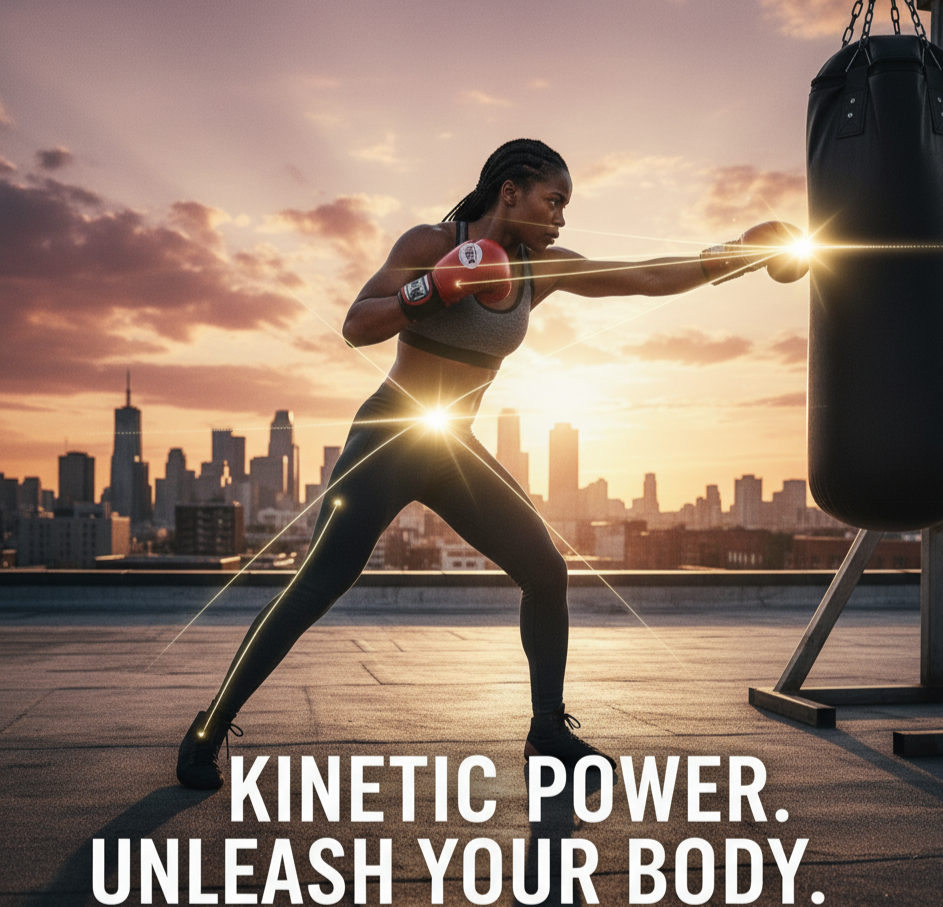
Focus on mastering the kinetic chain, and you’ll soon realize that your body is a far more powerful weapon than just your arm.