
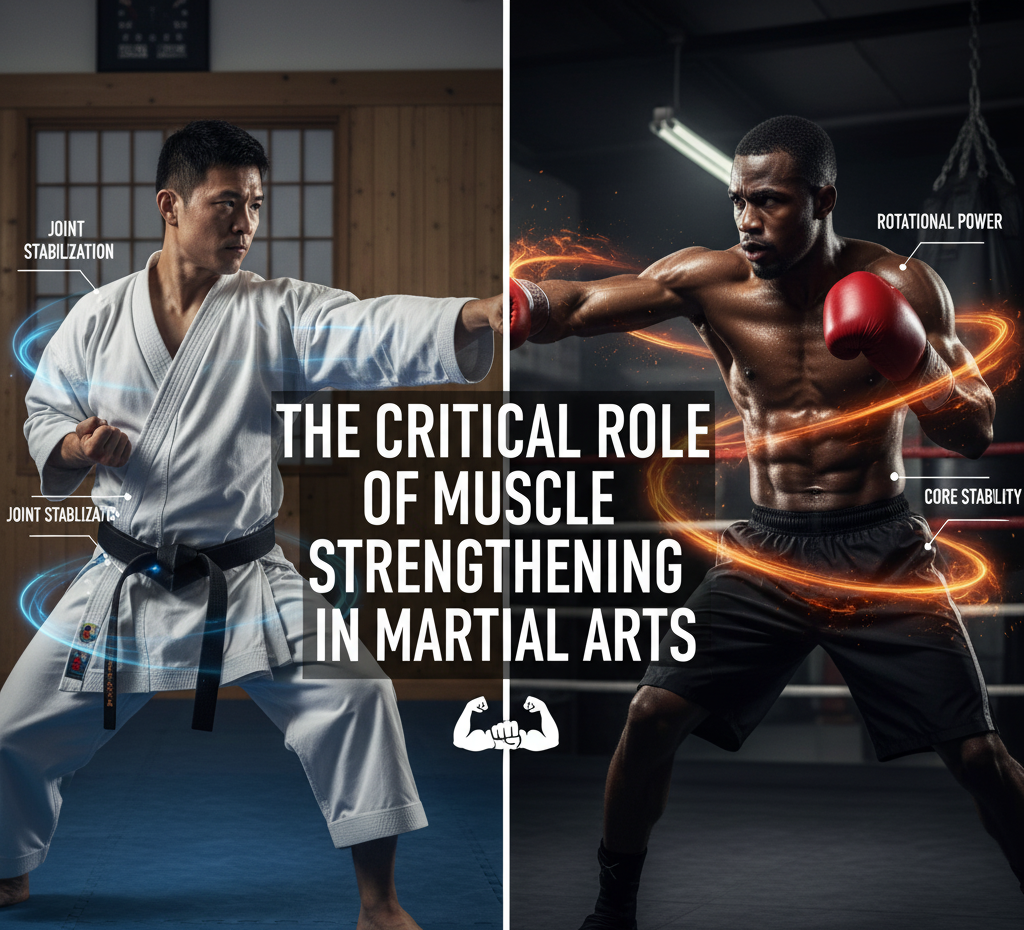
Whether you train in the precise, linear movements of Karate or the explosive, rotational power of Boxing, one fundamental principle underpins success: muscle strength. While technique and discipline are essential, neglecting dedicated strength training is like trying to drive a sports car with a lawnmower engine—you’ll be slow, lack power, and risk breaking down.
Enhancing Performance: Speed, Power, and Endurance
- Increased Striking Power (Knockout Power): A punch, kick, or block is a chain reaction that starts from the ground. Exercises like squats, deadlifts, and bench presses build the foundational strength in the legs, core, and chest/shoulders. This allows for a more forceful transfer of energy through the hips and core, culminating in an explosive strike. For a boxer, a stronger chest and triceps mean a faster, harder jab and cross. For a karateka, powerful legs and hips drive the force behind a snap kick or a reverse punch.
- Explosive Speed and Agility: Martial arts rely on rapid acceleration—a sudden feint, a fast withdrawal, or a quick change of angle. Plyometric and resistance training enhance fast-twitch muscle fiber recruitment. This translates to faster footwork, the ability to close distance instantly, and quicker reaction time to block or counter.
- Improved Muscular Endurance: A fight or sparring session is exhausting. A higher baseline of strength means your muscles don’t fatigue as quickly. You can maintain proper technique and power late into a round or a demanding kata (form).
The Ultimate Guard: Injury Prevention
One of the most significant, yet often overlooked, benefits of strength training is resilience to injury.
- Joint Stabilization: Strong muscles act as a natural brace for your joints, especially the knees, shoulders, and ankles—areas heavily stressed in martial arts. Strengthening the rotator cuff (shoulders) and the muscles around the knee helps them absorb the shock of impacts and the torque from rotational movements.
- Bone Density and Connective Tissue Strength: Lifting heavy weights stimulates the body to increase bone density, making you less susceptible to fractures. Furthermore, strengthening your tendons and ligaments improves the structural integrity of your entire body, allowing it to withstand the repetitive, high-impact nature of training.
- Core Strength for Balance and Protection: A powerful core (abdominals, obliques, and lower back) is the centerpiece. It connects your upper and lower body, stabilizes your spine, and is crucial for balance, pivoting, and absorbing body shots.
Conclusion: Train Smart, Fight Strong
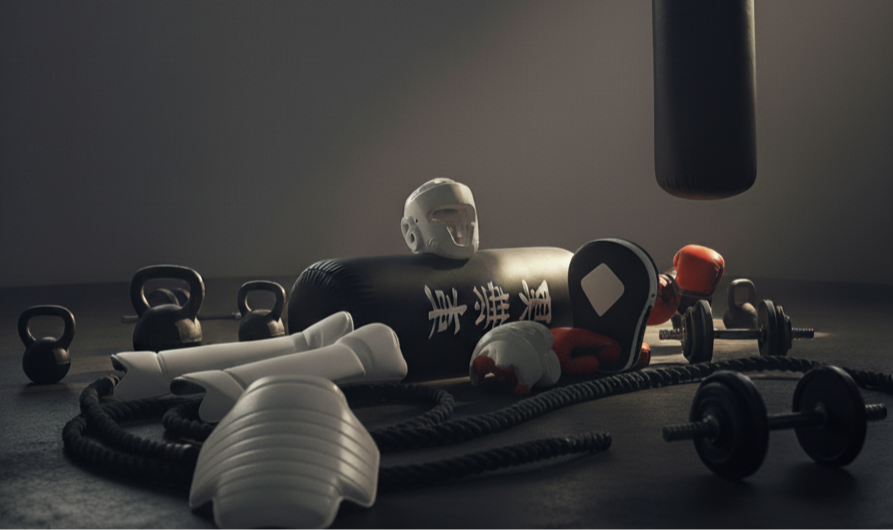
To truly excel in martial arts, you must train the whole athlete. Technique is the blueprint, but strength is the foundation. By dedicating time to structured muscle strengthening, you don’t just hit harder; you train longer, stay healthier, and ensure your martial arts journey is as long and powerful as your last strike.
Stop viewing strength training as an accessory—see it as an absolute necessity for unlocking your full potential.